Zanzibar Villa Renovation: The Complete Checklist for Foreign Owners
Renovating a villa in Zanzibar is a different process from building new. You are working within an existing structure, dealing with hidden conditions, and balancing modern standards with the original design intent. Foreign owners face additional challenges: managing the project remotely, navigating local supply chains, and ensuring the renovation meets both personal expectations and local building standards. This checklist covers every stage of a successful villa renovation.
Stage 1: Property Assessment
Before committing to a renovation, commission a thorough property assessment. This includes structural inspection (foundations, columns, slabs, roof structure), waterproofing assessment (roof, bathrooms, balconies, external walls), electrical and plumbing condition survey, pest and termites inspection, and aluminium/window condition assessment. A professional assessment costs $500 to $1,500 and prevents expensive surprises during renovation. In Zanzibar, termite damage and water ingress are the two most common hidden issues in existing villas.
Stage 2: Renovation Scope and Budget
Based on the assessment, define the renovation scope clearly. Common renovation categories include full interior renovation (kitchens, bathrooms, flooring, painting, ceilings), partial renovation (single room or area upgrade), exterior renovation (roofing, waterproofing, painting, paving), infrastructure upgrade (solar, security, water systems), and extension or structural modification. Budget ranges for Zanzibar villa renovations: cosmetic refresh ($50-$100/sqm), moderate renovation ($100-$250/sqm), major renovation ($250-$500/sqm), and luxury complete renovation ($500-$1000/sqm).
Stage 3: Design and Material Selection
Renovation design must account for existing structural constraints. Moving walls, altering plumbing routes, and changing window positions all add cost and complexity. Material selection for Zanzibar renovations should prioritise moisture-resistant and salt-resistant options: porcelain over natural stone for wet areas, aluminium over wood for external frames, marine-grade hardware for coastal properties, and anti-mould paint systems for humid zones. All material selections should be finalised before work begins to avoid delays and cost changes.
Stage 4: Permit and Preparation
Renovation permits are required for structural modifications, extensions, and changes to building footprint. Minor interior renovations typically do not require permits, but it is always prudent to check with the local council. Permit processing takes four to eight weeks. Site preparation includes protecting areas not being renovated, setting up temporary facilities, and establishing material storage. Your project partner coordinates all permit applications and site preparation.
Stage 5: Demolition and Structural Work
Demolition is the first physical work stage — removing existing finishes, opening walls for modifications, and exposing structural elements for assessment. This stage often reveals hidden conditions that were not visible during the initial assessment. Budget a 10 to 15 percent contingency for surprises discovered during demolition. Structural modifications — new openings, column reinforcement, slab repairs — must be done by qualified structural contractors with proper engineering oversight.
Stage 6: MEP Rough-In
Mechanical, electrical, and plumbing rough-in follows structural work. This includes new wiring, plumbing routes, HVAC preparation, and drainage modifications. In Zanzibar, upgrading electrical capacity is often necessary during renovation — older villas may have undersized distribution boards, inadequate earthing, and no provision for modern appliances. Plumbing upgrades should include proper water pressure systems, filtration, and modern fixture connections. This stage must be completed and inspected before closing walls.
Stage 7: Finishing Works
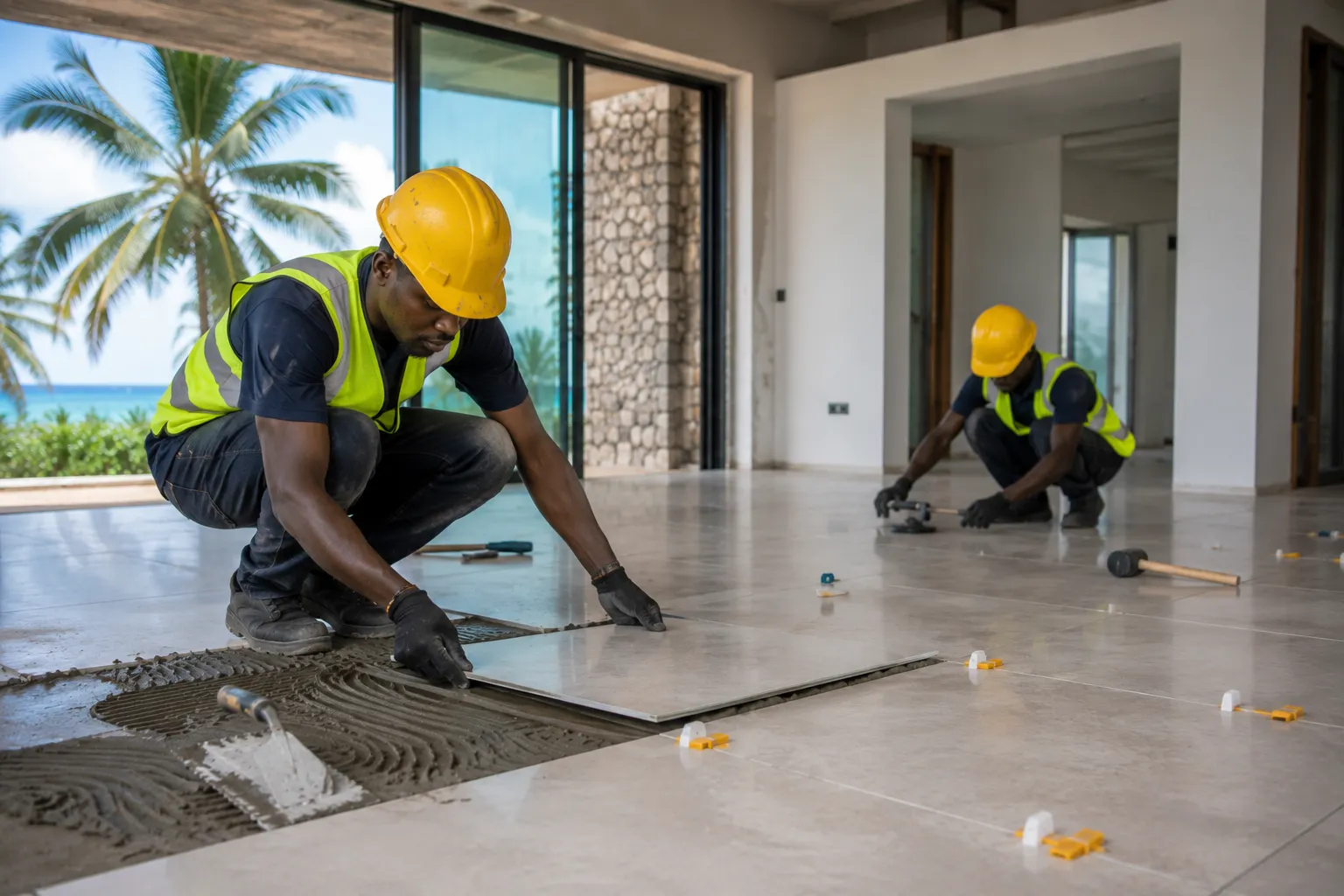
Finishing is the longest and most visible stage: tiling, painting, ceiling installation, kitchen fitting, bathroom completion, aluminium installation, and final electrical and plumbing connections. Quality finishing transforms a renovated structure into a livable luxury space. Material delivery timelines in Zanzibar can be lengthy — import orders take four to eight weeks, so all finishing materials should be ordered well in advance. Your project partner manages procurement and delivery scheduling as part of the project management service.
Stage 8: Handover and Snag List
The final stage is a thorough walkthrough to identify any defects, incomplete work, or quality issues — the snag list. A professional renovation should include a formal handover process with documented completion of all work items, warranty information for materials and workmanship, maintenance guidelines for all installed systems, and a defined defect liability period (typically 6 to 12 months). Your project partner ensures all snag items are resolved before final payment is released.
Timeline Expectations
A cosmetic renovation of a standard three-bedroom villa takes 4 to 8 weeks. A moderate renovation with kitchen and bathroom upgrades takes 8 to 16 weeks. A major renovation involving structural work, full rewire, and complete reconfiguration takes 16 to 30 weeks. Remote owners should add two to four weeks to these timelines to account for decision-making delays and material approvals. Planning your renovation during the dry season (June to October) avoids weather-related delays.
Ready to Start Your Project?
Get a complimentary site assessment and detailed quotation — typically within 48 hours. Our project team will walk you through timelines, material options, and budget breakdowns. No obligation, no hidden costs.
Complimentary site visits across Zanzibar. Reply within 2 hours via WhatsApp.